The ACT Rural Fire Service has quietly undergone a transformation in how it detects and responds to bushfires. What began as a safety initiative to reduce the risks for fire-tower operators has evolved into a 24/7 early-warning system that never sleeps—and it's fundamentally changing how fires are detected and managed across Canberra.
Last month, ACT Emergency Services published their own story about this evolution. What impressed us most wasn't just the operational capability they've built, but the philosophy behind it: technology that's designed to support firefighters, not replace them.
The Technology Behind the Platform
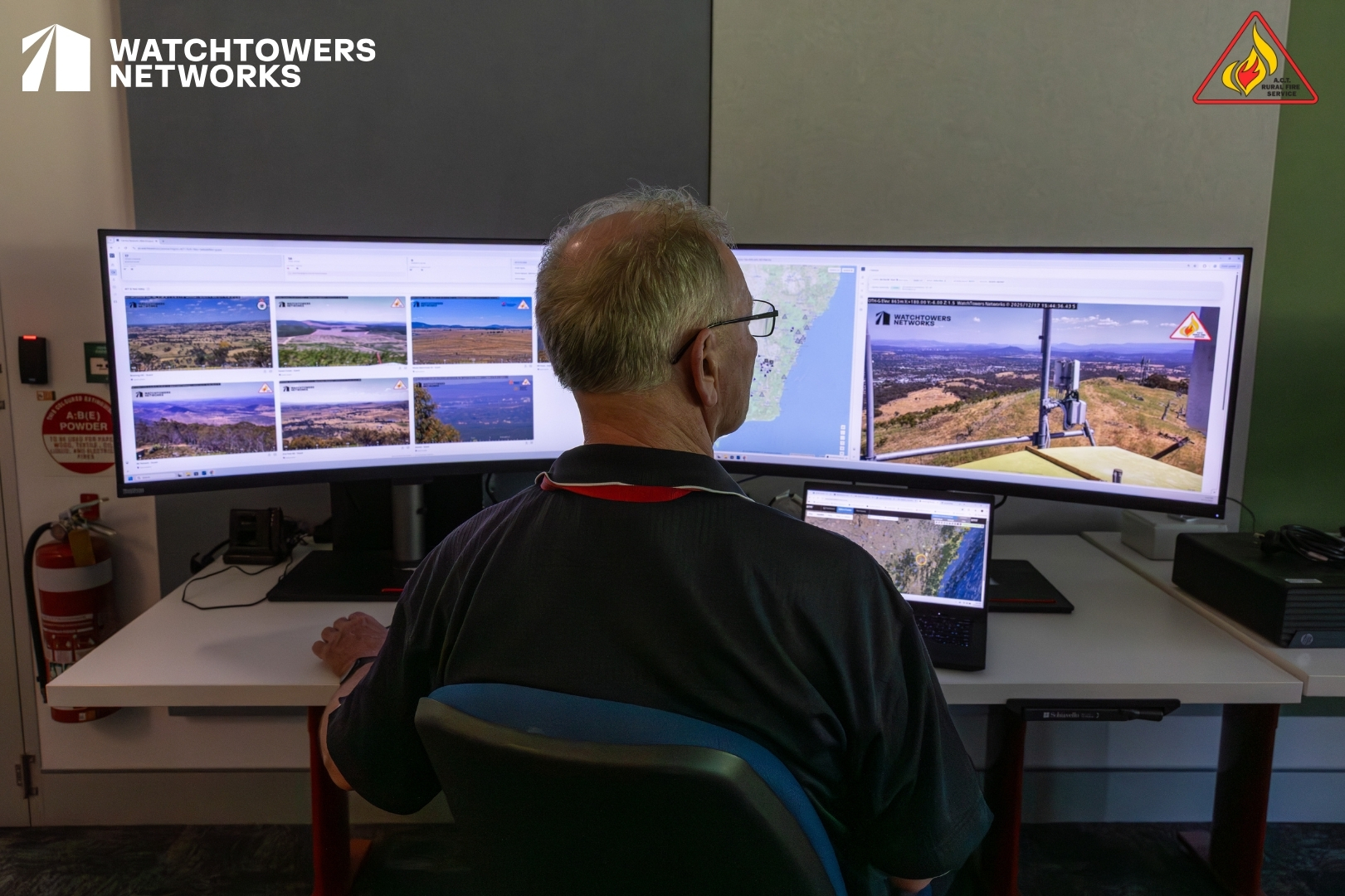
Four strategically positioned fire towers now surround the ACT, each fitted with a rotating "guard" camera and a powerful "sentry" camera that can be manually directed and zoomed to investigate anything of concern. But the cameras are only half the story.
The real shift came with the introduction of AI-assisted detection. As ACT RFS Chief Officer Rohan Scott noted in their article: "When we first introduced the technology, it was indicating pockets of dust, even picking up sunrise and sunset every day. But as the system has learnt, through our people confirming or denying incidents, we're now not getting as many false sightings. It's far more accurate, and that reduces our resource effort."
That learning process—where AI improves with human feedback—is the core of Lookouts.AI, our sovereign Australian smoke detection model. Developed specifically for Australia's unique landscapes, it now operates across the ACT RFS network, analysing camera feeds in real time to distinguish between smoke, dust, steam, and other landscape changes.
What This Means for Firefighters on the Ground
For most of the year, this technology hums quietly in the background. But during fire season, it becomes operational lifeline.
As Fire Tower Operator Andrew Beer explained: "As recently as last year, we had to have people in fire towers on high fire-danger days. Now, with the platform working 24/7, we can have an early notification of an incident, without having a human being out there all day and all night. The AI is always there. It's never asleep, and it's the first port of call to identify fire incidents."
That shift from human watch to intelligent detection has profound implications. Volunteers can be supported with real-time intelligence as they're travelling to a job, so they've got a very good picture of what they're experiencing before they even arrive. Remote operators can judge smoke colour, plume height, wind conditions, terrain and accessibility—all before a fire truck leaves a station.
It reduces unnecessary callouts. It preserves volunteer wellbeing. It saves time when every minute counts.
Built With, Not For
What we're most proud of is how this technology was developed. This isn't a vendor solution parachuted in from overseas. This is technology built *with* the ACT RFS, informed by two years of operational feedback from the people actually using it.
Ken Hall, Director of Operations at ACT RFS, and his team didn't just accept a product off-the-shelf—they worked alongside us to refine it, to make it smarter, to ensure it solved real operational problems. That's the difference between technology that looks good in a pitch deck and technology that actually works when lives depend on it.
We've carried that same philosophy into our work with NSW Rural Fire Service, NSW National Parks & Wildlife Service, and other fire agencies across the country. The platform powering this capability—our Command platform and CentralWatch public dashboard—is the result of countless conversations with firefighters, operators, and agency leaders about what they actually need.
The Bigger Picture
The ACT RFS story is a microcosm of a larger shift happening across Australian bushfire management. Agencies are moving from reactive detection to proactive early warning. From human-dependent monitoring to 24/7 AI-assisted systems. From siloed technology to open, interoperable platforms.
But—and this is critical—they're doing it in a way that amplifies human capability, not replaces it. As Chief Officer Scott said: "We are always going to need firefighters on the ground—they're the ones who physically put the fires out. AI is a tool that gives us reassurance and confirmation of our decisions. It's increased our knowledge and our ability to keep our people safe."
That's the philosophy we build on. Technology in service of the people who actually protect our communities.
Looking Ahead
We've been monitoring bushfires and supporting fire agencies for two years without missing a delivery. We're now live across 31 WatchTowers, covering 1.4 million hectares, and detecting thousands of fire events per year.
But we're not done. The technology is improving constantly. The network is expanding. And most importantly, the collaboration with agencies like the ACT RFS shows what's possible when technology and operational expertise combine.
This fire season, as in every fire season, our systems will run 24/7. Our AI will never sleep. And our teams will be working behind the scenes to support the frontline crews who keep our communities safe.
That's what it looks like when technology is built with fire services, not just for them.
---
WatchTowers Networks powers bushfire detection and early-warning systems for fire agencies across Australia.
Learn more about our Command platform and CentralWatch dashboard at https://centralwatch.watchtowers.io/au)

.png)